The Role of Assisted Stretch & Recovery in Your Fitness Program
When most people think about improving their fitness, their minds go straight to strength training, cardio workouts, or nutrition strategies. Stretching and recovery often sit lower on the priority list, yet they play a crucial role in keeping the body strong, mobile, and injury-free. Assisted stretch and recovery practices, guided by trained professionals, are becoming increasingly popular because they help athletes and everyday fitness enthusiasts unlock better performance, reduce soreness, and improve overall well-being. At New Mind & Body Personal Training Center, we integrate assisted stretch and recovery sessions into our private training services to help clients achieve these results safely and effectively.
Table of Contents
Why Recovery Matters as Much as Training
Every workout places stress on the muscles, tendons, and joints. This stress is necessary—it’s what stimulates growth, adaptation, and improved performance. However, progress happens during recovery, not during the workout itself. When the body doesn’t receive adequate time or support to recover, it can lead to plateaus, overtraining, nagging injuries, and a loss of motivation.
Proper recovery allows the muscles to repair and grow stronger, reduces the risk of strains and overuse injuries, and keeps energy levels high. Incorporating structured recovery into a training routine also supports hormonal balance, immune function, and better sleep quality. Recovery is not passive—it’s an active process that can be enhanced through techniques such as assisted stretching, mobility work, and guided relaxation.
What Is Assisted Stretching?
Assisted stretching involves working with a trainer or recovery specialist who helps guide your body through a series of stretches that you wouldn’t be able to achieve as effectively on your own. Unlike static stretching at home, assisted stretching uses controlled movements, proper alignment, and targeted breathing to lengthen tight muscles and improve joint mobility.
A trainer can apply just the right amount of pressure and movement to safely extend the stretch, which allows the muscle fibers to release more efficiently. Assisted stretching can also include techniques such as proprioceptive neuromuscular facilitation (PNF), where muscles are gently contracted and relaxed during a stretch to increase flexibility.
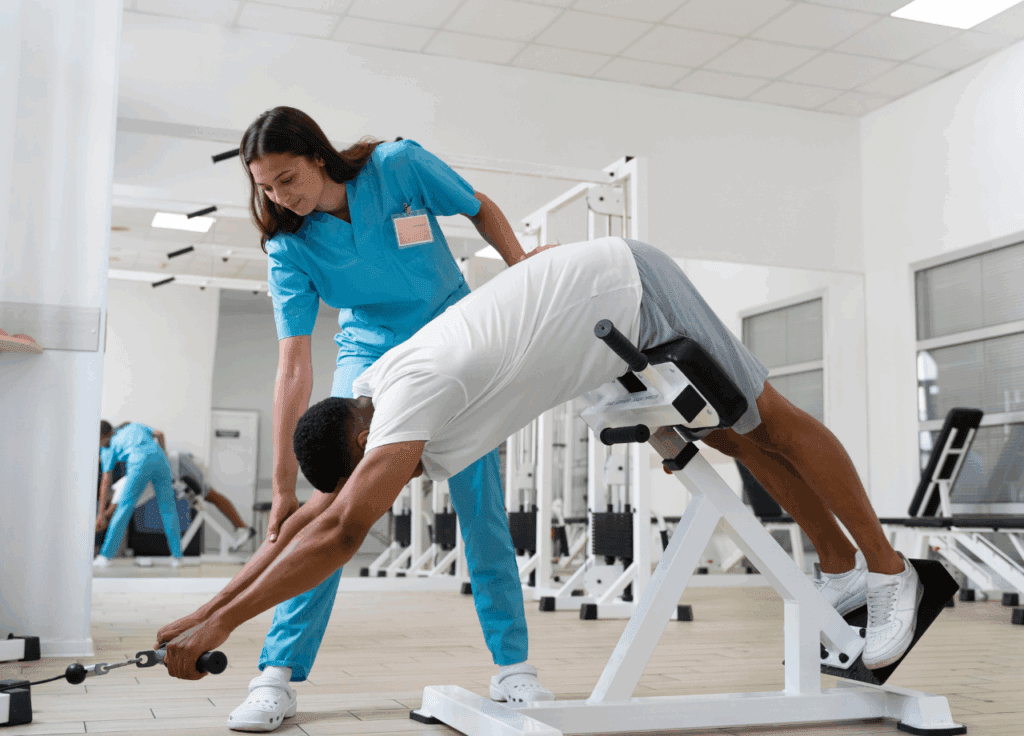
By having someone else control the stretch, you can fully relax and let the muscle fibers lengthen without compensating with poor posture or tension. This approach makes it a valuable tool for athletes, active individuals, and those who spend long hours sitting at work.
The Science Behind Stretching and Mobility
Flexibility and mobility are sometimes confused, but they’re not the same. Flexibility refers to the ability of a muscle to lengthen, while mobility refers to the ability of a joint to move through its full range of motion. Both are important for functional movement and injury prevention.
Studies show that assisted stretching helps improve range of motion by not only targeting the muscles but also by encouraging the nervous system to relax and allow greater movement. Muscle tightness is often more about nervous system “guarding” than physical shortening of the muscle. By using guided breathing, safe pressure, and gradual progressions, assisted stretching helps retrain the nervous system to reduce tension and improve mobility over time.
Additionally, assisted stretching increases blood flow to muscles, which promotes nutrient delivery and speeds up the repair of microtears that occur during training. This boost in circulation can also help reduce delayed onset muscle soreness (DOMS), the stiffness and pain many feel 24–72 hours after an intense workout.
Benefits of Assisted Stretch and Recovery
Improved Flexibility and Range of Motion
Assisted stretching allows you to go deeper into stretches than you could manage alone, helping tight muscles release more effectively. Improved flexibility and range of motion translate directly into better movement mechanics, which can enhance athletic performance and reduce injury risk.
Faster Recovery from Workouts
By stimulating circulation and reducing muscle tension, assisted stretching helps shorten recovery time between workouts. This means you can return to training sessions feeling fresher and stronger without lingering stiffness holding you back.
Pain Relief and Injury Prevention
Tight muscles and restricted joints often lead to compensation patterns in the body. Over time, this creates stress on joints, tendons, and ligaments. Regular assisted stretching addresses imbalances before they turn into chronic pain or injuries, especially for people who lift weights, run, or engage in repetitive activities.
Stress Reduction and Relaxation
Stretching isn’t just for the body—it also benefits the mind. Assisted stretch sessions promote relaxation by encouraging deep breathing and parasympathetic nervous system activity, which reduces stress hormones. Clients often leave sessions not only looser in their muscles but also calmer and more refreshed mentally.
Better Posture and Daily Movement
For those who spend long hours sitting at a desk, tight hip flexors, hamstrings, and shoulders are common. Assisted stretching counteracts these patterns by restoring alignment and improving posture, which carries over into more comfortable, efficient daily movement.
How Assisted Stretching Complements Your Training
Strength training builds strong muscles, cardio improves heart and lung health, and nutrition fuels the body. Assisted stretching ties all these elements together by keeping the body functioning optimally. Without flexibility and recovery, strength gains are limited, movement efficiency decreases, and the risk of burnout rises.
Athletes across sports have long recognized the value of structured recovery. Professional teams employ stretch therapists and mobility coaches for this reason. For the everyday fitness enthusiast, adding assisted stretch and recovery sessions can make training more sustainable and enjoyable.
Think of assisted stretching as insurance for your fitness program—it protects your investment of time and energy by ensuring your body remains resilient and capable of handling future workouts.
Who Can Benefit from Assisted Stretch and Recovery?
This type of recovery isn’t reserved for elite athletes. People at all fitness levels can benefit. Common groups who find it especially helpful include:

- Athletes and active individuals who want to improve performance and reduce injury risk.
- Beginners who may struggle with mobility and need support learning safe stretching techniques.
- Office workers dealing with stiffness from sitting for extended hours.
- Older adults who want to maintain joint health and independence through improved mobility.
- Those recovering from injuries (with clearance from a medical provider) who need gentle, guided stretching to restore function.
In each case, the principles are the same: improve range of motion, reduce unnecessary muscle tension, and promote faster recovery.
How Often Should You Include Assisted Stretching?
The frequency of assisted stretch and recovery sessions depends on activity level, training intensity, and individual needs. Many active people benefit from one or two sessions per week, while others may include it as needed around particularly demanding workouts.
Consistency is key. Just as strength and endurance improve with regular training, flexibility and mobility improve with regular practice. The body adapts gradually, and over time, assisted stretching can become a cornerstone of sustainable fitness.
Bringing It All Together
Fitness is about more than lifting heavier weights or running faster miles—it’s about moving well, staying injury-free, and enjoying an active lifestyle for years to come. Assisted stretch and recovery provide a powerful way to support those goals. By improving flexibility, enhancing mobility, reducing pain, and speeding recovery, these practices give you the tools to keep progressing without unnecessary setbacks.
If you’re serious about your health and fitness journey, giving recovery the attention it deserves is one of the smartest investments you can make. Assisted stretch sessions are not a luxury; they are an essential component of a balanced program that allows the body to thrive.